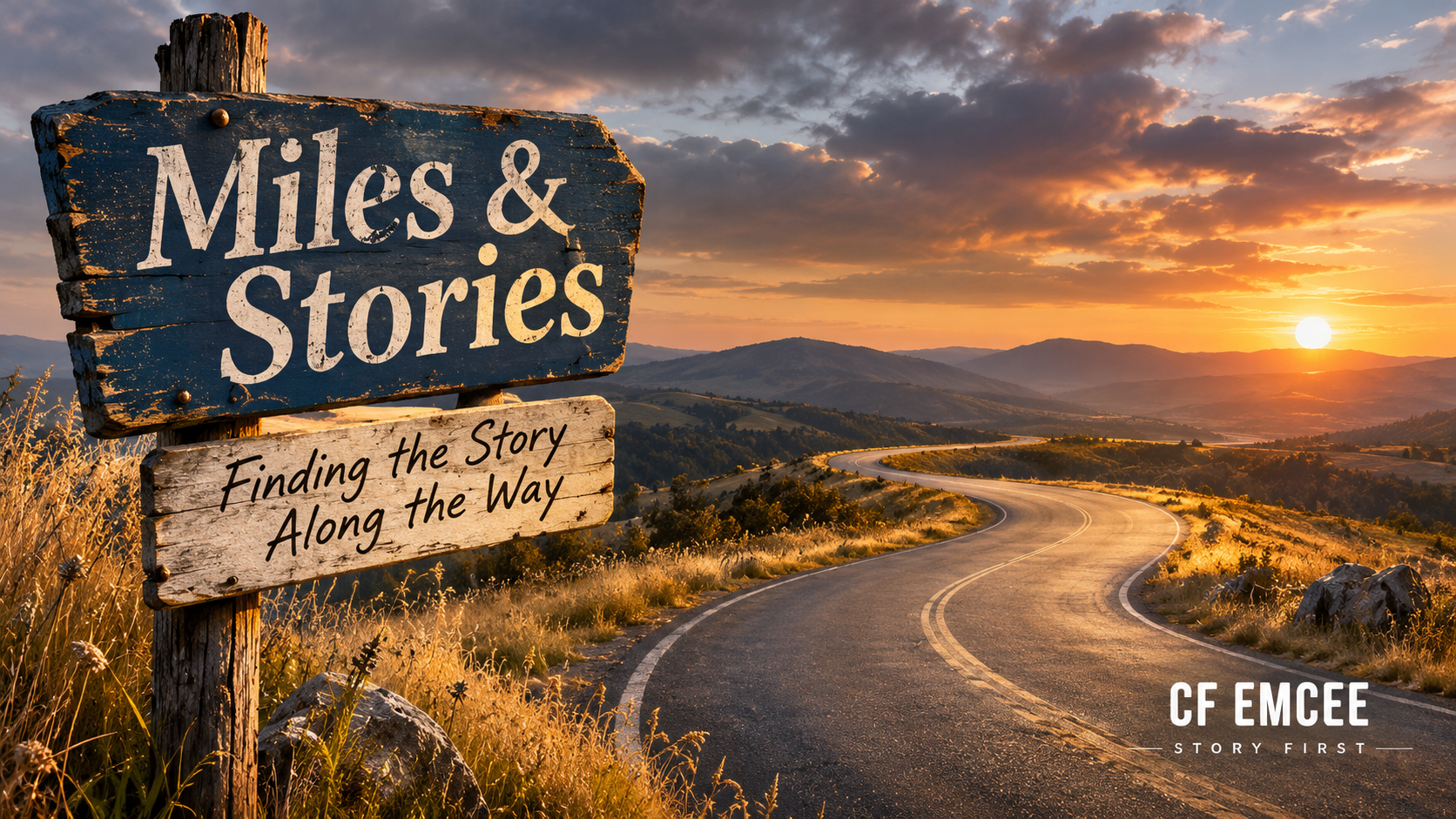
When I started working on Miles & Stories, I had no carefully mapped-out narrative in mind, no master plan for a thirteen-song journey and certainly no idea where it would eventually lead. What I had was a growing collection of songs about roads, cars, travelling companions, unexpected encounters and the occasional wrong turn. Each song had its own story to tell, but as the collection grew, I began to suspect that together they might be telling a much larger one.
The original selection contained somewhere around fifteen or sixteen tracks, including ideas such as Tunnels & Bridges, Headwind and Tailwind. They all belonged to the world I was creating, but belonging to the same world isn’t necessarily enough to make a coherent album. Gradually, I started paying more attention to how the songs related to one another, what each contributed to the overall journey and whether the sequence made sense, not just musically but also as a story.
That meant making choices. Some songs had to go, others needed to change position, and occasionally I found that a perfectly good idea was simply covering ground another track had already explored. I wasn’t trying to force the songs into a predetermined concept, but once the underlying narrative began to reveal itself, I became quite deliberate about shaping it. The final thirteen tracks are therefore neither an accidental collection nor the result of a rigid plan. The album grew organically, but its eventual structure was very much a conscious decision.
The journey begins, appropriately enough, with Full Tank. There’s an almost irresistible optimism in setting off with a full tank, an open road and no immediate reason to worry about what lies ahead. Windows Down carries that carefree feeling forward, while Passenger Seat introduces something that becomes increasingly important as the album progresses: the people who accompany us, whether they remain beside us for years or share only a few miles of the journey.
Of course, no worthwhile road trip follows the itinerary exactly, and Wrong Turn, Right Day is the first indication that getting lost might occasionally be the best thing that can happen. That idea finds a more reflective expression in Roadside Diner, which occupies a rather special place in the album. While most of the other songs allow their underlying meaning to emerge through the familiar language of roads and driving, Roadside Diner comes unusually close to explaining the philosophy itself. Some of life’s most memorable moments happen by chance, and no amount of planning can guarantee the kind of encounter that makes an otherwise ordinary day unforgettable.
From there, the road becomes a little less predictable. Roadworks Ahead introduces the delays and obstacles that inevitably interrupt our plans, while No Signal explores the curious possibility that losing our connection to the outside world might help us reconnect with something more important. What began as a celebration of movement and freedom is gradually becoming a journey of discovery, with the traveller learning that progress isn’t always measured by the distance covered.
The middle of the album also marks a shift from what happens around us to what we carry within us. The Things We Tow considers the emotional baggage we accumulate, the experiences and responsibilities we drag along, sometimes without questioning whether they still deserve the weight we give them. Back in Tune then offers a gentler moment of recovery, the pleasure of finding a rhythm that had somehow gone missing, before Shifting Gears brings back a sense of momentum. By this point, the traveller is no longer quite the same person who set off so enthusiastically in Full Tank.
That change becomes particularly apparent in High Mileage, where the miles travelled are no longer something to count but something to wear with pride. Experience, including the occasional dent and scratch, has become part of the traveller’s identity. Rearview Mirror follows naturally, offering an opportunity to look back at the road already travelled and recognise how much of it has contributed to the person sitting behind the wheel today.
And then there is Reset, which closes the album in a rather different spirit from the one in which it began. Instead of a grand arrival or a triumphant declaration that the journey has reached its destination, it offers something quieter and perhaps more meaningful: the possibility of clearing some space, accepting what has happened and moving forward without pretending that the past can simply be erased.
Looking back at the creative process, I find it rather amusing that the making of Miles & Stories followed much the same pattern as the journey it describes. I started without knowing exactly where I was going, discovered connections I hadn’t anticipated, took a few detours and eventually had to leave some perfectly good ideas by the roadside. There was plenty of conscious editing involved, particularly when it came to the chronology, but the story itself was something I discovered rather than something I had decided to tell from the outset.
Perhaps that is what gives the album its coherence. The thirteen songs weren’t written to illustrate thirteen chapters of an existing story. They became those chapters because, somewhere along the way, I realised they belonged together, and because I was willing to remove or rearrange whatever prevented that larger story from making sense.
Miles & Stories is now a completed chapter of my musical work. I’ve moved on to other concepts, other subjects and entirely different worlds to explore, with no intention of extending this particular journey simply for the sake of adding more miles.
What began as a collection of road songs eventually became an album about companionship, chance, resilience, experience and acceptance. The road was always there, providing the scenery and the vocabulary, but it was never really the point.
The stories were. And it took the journey itself to discover that.